In today’s business environment, it’s not artificial intelligence that will replace people — it’s the professionals who know how to use AI who will move ahead. Those who understand, adopt, and apply this technology will be the ones shaping the future of their industries. The question is no longer if you will integrate AI into your business — but how soon.
Join us for the 4th generation of the Mini MBA in Artificial Intelligence and turn this capability into your competitive advantage.
This comprehensive program consists of six strategically designed modules, each addressing a key application of artificial intelligence in modern business. The content is structured to be interactive, focused, and above all — practical. Participants develop skills and tools that can be applied immediately in real-world decision-making.
Beyond expert-led sessions, you’ll gain access to a robust collection of supporting materials, including real-life case studies, e-books, and curated content to deepen your understanding and extend learning beyond the classroom.
Whether you work in leadership, marketing, finance, or operations, this program will help you stay ahead — and make sure you’re the one using AI, not the one being left behind.
“You’re not going to lose your job to AI, but you’re going to lose your job to somebody who uses AI.”
Jensen Huang, CEO of NVIDIA
Artificial Intelligence – Modules
1.Marketing, Content and Brand Strategy with AI
Participants will gain a strategic and practical understanding of how Large Language Models can enhance marketing effectiveness, scale content creation and strengthen brand consistency while managing risks such as bias, hallucinations and brand dilution. The content provides a clear view of how LLMs support essential marketing activities, from creating campaigns and personalised communication to improving SEO and brand management. The focus is on how AI shifts marketing toward augmented creativity and data-driven storytelling, enabling managers to make more informed decisions without the need for technical expertise.
Effective innovation requires the ability to quickly understand information and turn ideas into practical solutions. This module explores how Large Language Models can support research and product development by assisting with literature reviews, idea generation, concept testing, and knowledge organization. Participants learn where AI can meaningfully improve the R&D process, how to use it to develop and refine hypotheses, and how to critically evaluate results to ensure reliability. Governance standards and ethical considerations are addressed throughout to ensure responsible and well-informed use of AI in research and innovation contexts.
Lecturer: Ivan David Dogan, mag. phil., MBA
3. Intelligent Data Extraction with AI
Large Language Models are transforming key marketing activities by enabling faster content creation, stronger campaign ideas, personalised communication, improved SEO and more consistent brand management. This module explains how LLMs can increase marketing effectiveness and content scalability while managing risks such as bias, hallucinations and brand dilution. The focus is on using AI to elevate creativity and support data-driven storytelling, giving managers clearer insights and more informed decision-making without requiring technical expertise.
Designed to enable professionals to apply advanced generative AI tools to complex data analysis without programming knowledge, this module demonstrates how large language models such as Gemini Pro and ChatGPT can transform raw data into strategic insight. Working directly with Excel, CSV, and PDF files, participants learn to automate reporting, identify patterns and anomalies, and move from descriptive to prescriptive analysis through natural language interaction with data. Emphasis is placed on accuracy, verification methodologies, and the ethical and secure handling of business information. The outcome is the ability to translate data into clear, evidence-based recommendations and compelling business narratives with speed and confidence.
5.AI-Powered Automation and Application Development
Centered on practical workflow transformation, this module focuses on building tangible internal tools rather than analyzing data. Participants learn how to use generative AI as a development partner to design automation logic, generate advanced spreadsheet formulas, create macros, and connect business processes across systems. A strong emphasis is placed on the ability to produce functional scripts and utility tools, including VBA, Google Apps Script, and simple Python solutions for file and document management, enabling immediate automation of repetitive operational tasks. By structuring clear instructions, testing outputs, and refining AI-generated code securely, participants develop the capability to independently design and deploy lightweight business applications that reduce inefficiencies and increase operational agility.
The final module provides a structured understanding of the ethical foundations that guide the development and use of artificial intelligence. Participants learn to distinguish ethical responsibility from legal regulation and examine key issues such as human accountability, AI responsibility toward users, privacy protection, transparency, and security. Emphasis is placed on practical application within participants’ professional environments. The module concludes with the development of a tailored AI code of ethics, enabling participants to recognize ethical challenges and formulate well-reasoned, responsible solutions.
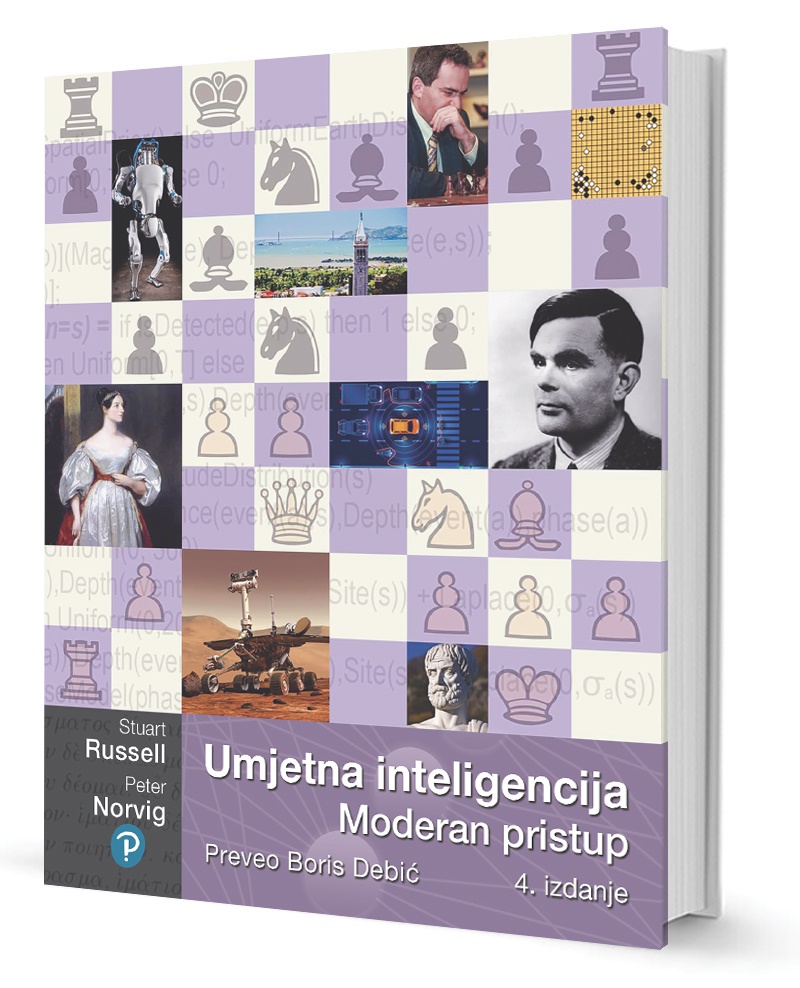
The program is based on the book Artificial Intelligence: A Modern Approach by Stuart J. Russell and Peter Norvig. This comprehensive book covers key areas of artificial intelligence, including machine learning, probabilistic reasoning, robotics, and ethical considerations. The latest edition provides an updated overview of AI research and applications.